
Legendary Dragon Ball Editor Critiques Modern Anime Trends
Former Toriyama editor sparks controversy with comments on One Piece and Jujutsu Kaisen complexity
Kazuhiko Torishima, a titan of the manga industry, has returned to the spotlight following provocative statements regarding today’s most popular anime and manga. The former Dragon Ball editor, renowned for his pivotal role in guiding Akira Toriyama, criticized the narrative trajectories of modern giants like One Piece and Jujutsu Kaisen.
His remarks spread like wildfire across social media, reigniting a long-standing debate: has modern anime become too complicated for its own good? As of May 2026, this discussion has become a focal point for fans analyzing the generational divide between “classic” accessibility and “modern” narrative density.
Who is Kazuhiko Torishima?
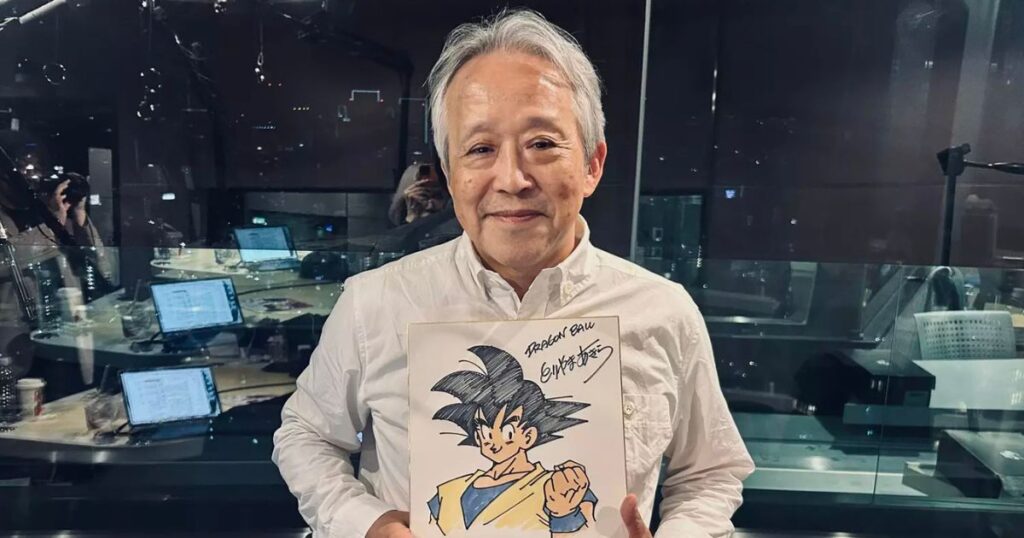
Kazuhiko Torishima is more than just a retired executive; he is an architect of the global anime explosion. During his tenure at Weekly Shonen Jump, he was the primary editor for Dragon Ball, serving as the creative foil to Akira Toriyama.
Torishima is widely credited with shaping the humor, pacing, and iconic structural elements of the franchise. His influence was so great that he famously inspired the villainous character “Dr. Mashirito” in Dr. Slump. Because of this legendary track record, his critiques carry immense weight among both industry professionals and the global “Otaku” community.
The Core of Torishima’s Critique: “Narrative Overload”
During recent industry panels and interviews, Torishima expressed concern that modern anime and manga have fallen into a trap of excessive narrative complexity. He argued that current works are becoming increasingly difficult for general audiences to follow.
According to Torishima, many contemporary creators rely too heavily on intricate “power systems” and layered explanations that slow down the story.
He suggests that the focus has shifted from intuitive character-driven action to academic-style world-building that requires constant exposition.
While his comments were general, the timing coincided with major plot developments in One Piece and Jujutsu Kaisen, leading the internet to quickly draw its own conclusions.
One Piece and Jujutsu Kaisen: At the Center of the Storm
The mention of One Piece and Jujutsu Kaisen in the context of Torishima’s remarks has divided fanbases. As of May 12, 2026, both series are navigating complex endgame scenarios that demand high levels of reader investment.
In the case of One Piece, critics point to the staggering volume of characters, political factions, and lore accumulated over nearly 30 years. Conversely, for Jujutsu Kaisen, the debate centers on the “Cursed Energy” system, which often requires pages of technical dialogue to explain a single combat move—a stark contrast to the visual clarity of the 80s and 90s.
Modern anime traits criticized by Torishima:
Excessive Narrative Complexity: Plots that require external wikis to fully comprehend.
Overcrowded Casts: Too many simultaneous characters competing for screen time.
Convoluted Power Systems: Technical rules that overshadow the emotional stakes of a fight.
Exposition Dumps: Lengthy dialogues used to explain mechanics rather than showing action.
Inaccessible Pacing: A rhythm that caters to “hardcore” fans while alienating casual viewers.
The Dragon Ball Formula: Simplicity as a Strength
Many fans have countered Torishima’s views by highlighting that Dragon Ball succeeded precisely because it followed a direct, high-energy formula. Akira Toriyama’s work prioritized dynamic action, clear visual progression, and relatable character archetypes.
This “Golden Era” approach turned Dragon Ball into a universal phenomenon. It proved that a story does not need thousands of pages of lore to be profound; it simply needs to be accessible. However, modern defenders argue that the “simple” era has already been mastered, leaving current authors no choice but to innovate through complexity.
A Divided Global Community
The declarations have split the community into two distinct camps. One side agrees with Torishima, feeling “fatigued” by the mental effort required to keep up with modern weekly releases. The other side defends modern complexity as a natural evolution of the medium, arguing that audiences in 2026 are more sophisticated and demand deeper, more detailed storytelling.
Common Fan Reactions:
Nostalgia Support: Fans longing for the “hit and run” style of classic Shonen.
Defense of Modernism: Arguments that complex lore increases “rewatchability” and engagement.
Industry Comparisons: Side-by-side analysis of Dragon Ball’s choreography vs. modern technical fights.
Accessibility Debate: Discussions on whether anime is becoming a “niche” hobby again due to its complexity.
Evolutionary Necessity: Belief that modern competition requires dense world-building to stand out.
The Shift in Industry Demands
The context of today’s anime industry is vastly different from the era of Torishima’s prime. Today, creators compete in a saturated market where “universe building” is a requirement for long-term commercial success.
Modern fans often engage with series through theories, deep-dive YouTube videos, and social media debates. This culture encourages authors to create “dense” content that provides material for this type of fan engagement. In 2026, a series that is “too simple” risks being forgotten in the shuffle of seasonal releases.
A Vital Conversation for the Future
Despite the controversy, Torishima’s critique has opened a healthy dialogue about the direction of Japanese entertainment. There is arguably room for both styles: the streamlined, iconic action of the Dragon Ball lineage and the cerebral, rule-based thrillers of the modern age.
Ultimately, this debate reflects how the market has matured. Different generations of fans consume media differently, and the most successful future projects will likely be those that manage to balance Torishima’s “intuitive simplicity” with the “sophisticated depth” demanded by modern audiences.

Kazuhiko Torishima may have sparked a firestorm, but his words highlight a critical crossroads for anime and manga. Whether one prefers the accessibility of a classic or the complexity of a modern epic, it is clear that the opinions of the industry’s founding fathers still have the power to move the world. As the industry looks toward the next decade, the balance between “storytelling” and “explaining” will remain its biggest challenge.