Google Health Coach: The AI Revolution Redefining Personal Wellness
How Personalized Artificial Intelligence is Transforming Digital Health and Bio-Monitoring in 2026
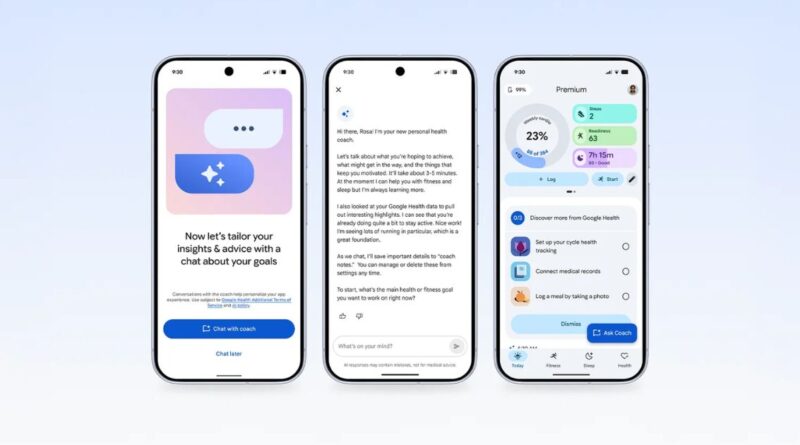
The Google Health Coach is rapidly emerging as one of Google’s most ambitious initiatives within the intersection of Artificial Intelligence and personal healthcare. Powered by the latest iterations of Gemini-based medical models, this innovation utilizes advanced AI to generate highly personalized recommendations concerning exercise, nutrition, sleep hygiene, and daily mental well-being.
The core mission is to transition away from generic “one-size-fits-all” fitness apps toward an individualized, intelligent experience. By analyzing long-term user patterns and real-time biometric data, the Google Health Coach acts as a proactive digital companion, suggesting lifestyle optimizations based on a user’s unique physiological data and daily environmental context.
What is Google Health Coach? The Digital Transformation of the Personal Trainer
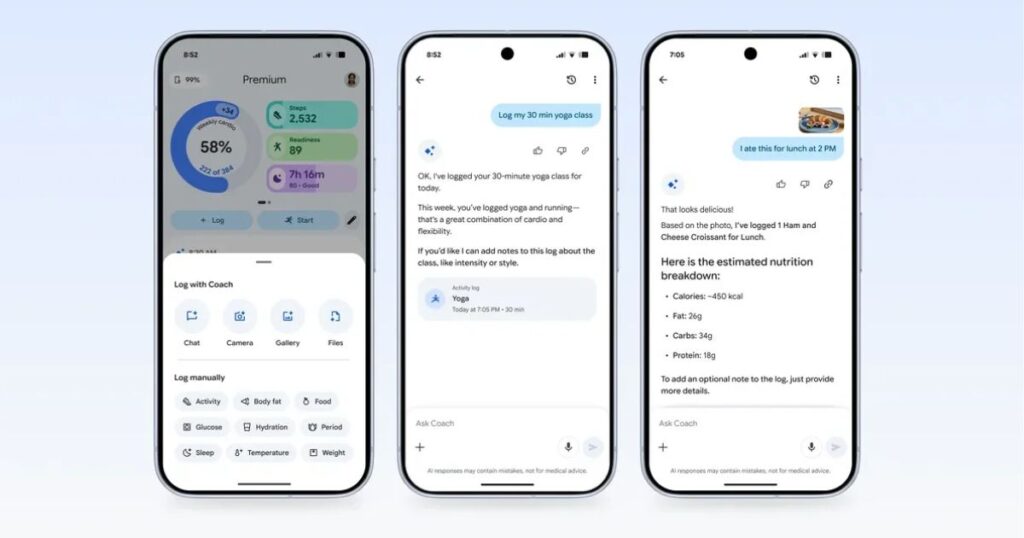
Google Health Coach functions as a sophisticated digital assistant dedicated to holistic wellness. Unlike previous iterations of Google Fit, this platform leverages Med-PaLM 3 and Gemini 2.0 architectures to interpret complex health data into actionable advice.
The AI doesn’t just track metrics; it interprets the relationship between them. It understands, for instance, how a poor night’s sleep (captured by a wearable) might affect your glucose sensitivity or your cardiovascular performance the following day. This deep personalization aims to mimic the constant, intelligent oversight of a human health professional, available 24/7 on your mobile device.
The Engine Under the Hood: How the AI Operates
The primary differentiator of the Google Health Coach is its ability to learn from behavioral psychology. Instead of merely displaying generic daily goals, the system identifies personal obstacles. If the AI notices you consistently skip workouts on rainy days or during high-stress work weeks, it adjusts its motivational strategy.
Context-Aware Recommendations
Hydration Reminders: Based on local temperature and your recorded perspiration levels.
Sleep Optimization: Suggesting earlier wind-down times after identifying patterns of late-night blue light exposure.
Exercise Variety: Recommending low-impact activities during periods where heart rate variability (HRV) indicates high physical fatigue.
This “learning” phase ensures the experience feels more like a partnership than a series of automated notifications.
Seamless Integration: The Ecosystem of Wearables
A key pillar of this technology is its integration with the Fitbit and Pixel Watch ecosystems. By May 2026, Google has finalized a deeper synchronization between hardware and the Health Coach software. The AI utilizes high-frequency data from skin temperature sensors, SpO2 monitors, and continuous glucose monitors (CGMs).
This ecosystem allows the AI to provide a “Full Body Scan” view. It effectively transforms everyday consumer electronics into clinical-grade monitoring tools, reinforcing the industry trend of preventative bio-monitoring. At G3GEEK, we see this as the bridge between “Geek Tech” and “Med Tech.”
Primary Metrics Monitored by Google Health Coach:
Sleep Architecture: Tracking REM, Deep, and Light sleep stages with AI-driven recovery scores.
Autonomic Nervous System (ANS) Balance: Using Heart Rate Variability to gauge stress levels.
Nutritional Analysis: AI-assisted meal logging through photo recognition and glycemic index estimates.
Activity Intensity: Differentiating between “Movement” and “Effective Training.”
Mental Equilibrium: Mood tracking and guided mindfulness based on physiological stress triggers.
AI in Healthcare: A Strategic Global Priority
The advancement of the Google Health Coach reflects a broader shift among Silicon Valley giants. Companies like Apple and Amazon are similarly racing to dominate the wellness space. However, Google’s advantage lies in its vast database of search intent and its mastery of Large Language Models (LLMs).
The goal is no longer just “tracking” chronic conditions but preventing them. By identifying pre-diabetic patterns or early signs of cardiovascular strain through the Health Coach, Google aims to reduce the long-term burden on global healthcare systems. From a commercial perspective, the personalized wellness market is projected to be worth billions by the end of 2030.
The Privacy Paradox: Securing Your Biological Data
Despite the technological brilliance, the use of AI in personal health raises critical questions about data privacy. Biological data is the most sensitive information a person can own. Experts at the Center for Digital Health Ethics have warned that transparency is paramount.
Google has responded by implementing On-Device Processing for the most sensitive health metrics, ensuring that your raw heart rate or stress data never leaves the hardware unless encrypted for cloud-based LLM analysis. The challenge for the G3GEEK generation will be balancing the benefits of a “super-intelligent coach” with the necessity of digital sovereignty.
Creating a “Human” Connection with AI
Google’s vision extends beyond cold data. They are working on Empathetic AI—a system that understands context and emotion. The Health Coach is designed to recognize when a user is frustrated or discouraged, shifting its tone from a “drill sergeant” to a “supportive mentor.”
This movement toward “Warm AI” is part of the next generation of assistants. By using natural language processing (NLP) that mimics human conversation, the Google Health Coach reduces the friction of adopting new habits, making lifestyle changes feel more intuitive and less like a chore.
Strategic Benefits of the Google Health Coach:
Bespoke Wellness: Recommendations tailored to your specific DNA and metabolism.
Proactive Prevention: Identifying health risks before they manifest as symptoms.
24/7 Accessibility: Expert-level advice without the cost of a private trainer.
Unified Ecosystem: All your health data (Sleep, Food, Gym) in one intelligent hub.
Adaptive Motivation: A coach that changes its strategy based on your current mood and energy.
The Future of the Digital Health Frontier
As we look toward 2027 and beyond, the Google Health Coach is expected to integrate with AR (Augmented Reality) glasses, providing real-time nutritional overlays on food or form-correction during workouts. The trajectory is clear: our digital lives are becoming inseparable from our biological health.
The success of this platform will depend on how effectively it can turn “Data” into “Action.” While tracking steps was the goal of the 2010s, the goal of the 2026 era is comprehensive metabolic and mental optimization.
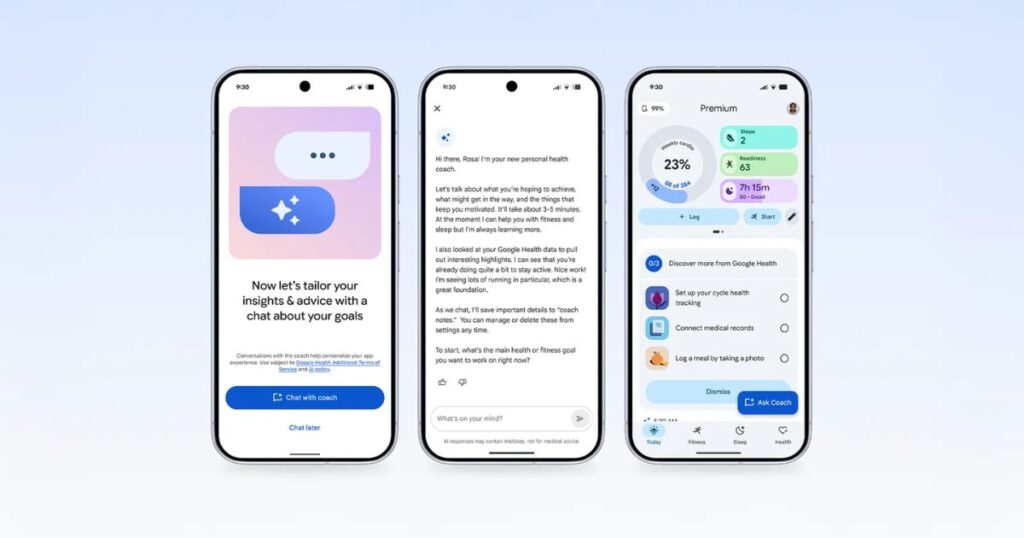
The Google Health Coach represents a monumental shift in how we approach personal health. By merging the analytical power of AI with the intimacy of a personal assistant, Google is creating a tool that can truly change lives. If the platform succeeds in maintaining its balance of efficiency, empathy, and ironclad privacy, it could become the standard for the new era of digital well-being.
Would you trust a high-level Artificial Intelligence to monitor your biological data 24/7 in exchange for a longer, healthier life?